🔬 Microscopes Compared for UK Research Laboratories
Independent, hands-on microscope reviews for UK cell culture, fluorescence and live-cell labs. We compare EVOS, Olympus, Nikon and other systems from the perspective of a working UK lab — not a sales brochure.
📷 Digital Microscope with Camera UK
Updated 18 Oct 2026: compare the best digital microscope with camera UK models — USB, WiFi, LCD all-in-one and research systems.
Recommended Microscopes for UK Labs
EVOS M3000 Imaging System

Image: Thermo Fisher Scientific
- Two-channel fluorescence: Brightfield, phase contrast and two LED fluorescence channels — typically configured for GFP/RFP-style work (light-cube dependent)
- Imaging-only capture: High-quality transmitted-light and fluorescence images; no built-in automated cell counting or confluence module
- Flexible Objectives: Compatible with full selection of EVOS objectives (1.25-60X) and light cubes
- No Training Required: Simple user interface with touchscreen display
- Space-Saving Design: Smallest EVOS footprint fits easily on lab bench or in cell culture hood
- Network Connectivity: Network-capable for seamless data transfer, storage and collaboration
The EVOS M3000 is a popular entry-level to mid-range imaging system for UK cell culture labs. It combines transmitted light, phase contrast and two-channel fluorescence in a standalone touchscreen unit. For a side-by-side comparison, see our EVOS M3000 vs M5000 vs M7000 guide or the M3000 & M5000 comparison.
View Product → Compare Inverted Microscopes UKEVOS M5000 — Professional Fluorescence Microscope
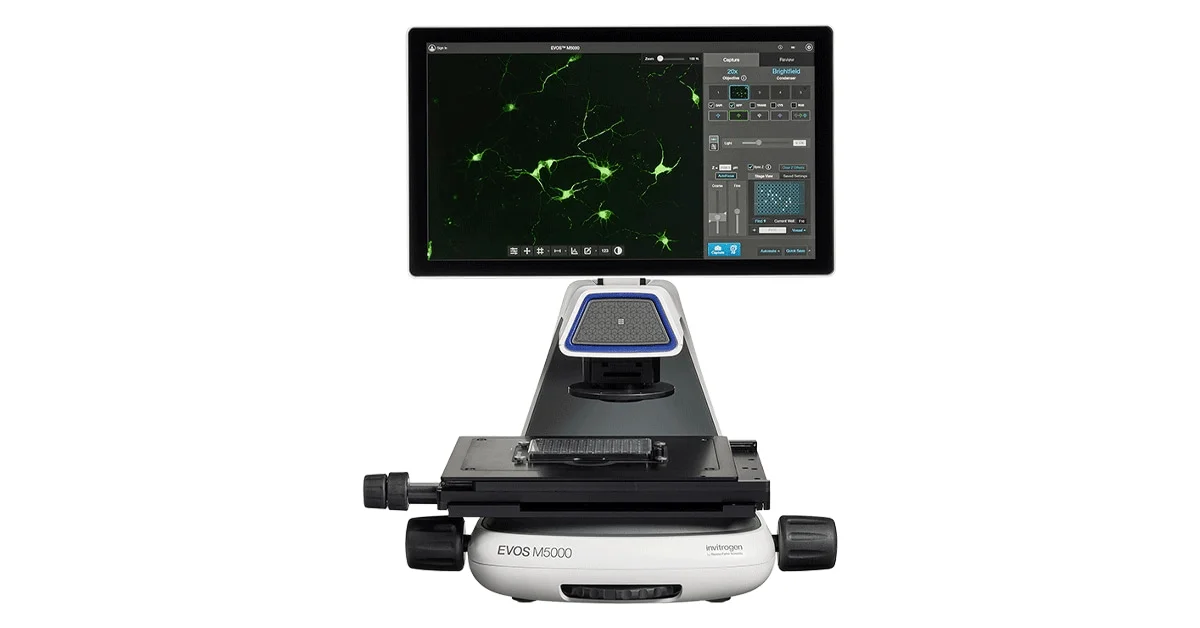
Image: Thermo Fisher Scientific
- Four-Colour Fluorescence Imaging: Four fluorescent channels plus transmitted light, phase contrast and colour imaging
- Automated Cell Counting & Confluence: Built-in Celleste-derived analysis for cell count, confluence and transfection efficiency
- 18.5" HD Articulated Monitor: Built-in high-resolution LCD monitor
- Stage-Tracking and Z-Stack: Track location, mark, save, and return to areas of interest with Z-stack capability
- Time-Lapse Imaging: Live cell studies with automated time-lapse capture
- Highly Sensitive Camera: Monochrome camera delivers excellent image quality
- Designed by Biologists: Easy-to-use microscope with seamless image acquisition and annotation tools
Professional fluorescence microscope with four-colour fluorescence imaging and 18.5-inch HD articulated monitor. Features built-in automated cell counting and confluence analysis for productive cell culture workflows. Stage-tracking, Z-stack and time-lapse capability support advanced cell biology research.
View Product →CellInsight CX7 LED Pro HCS Platform
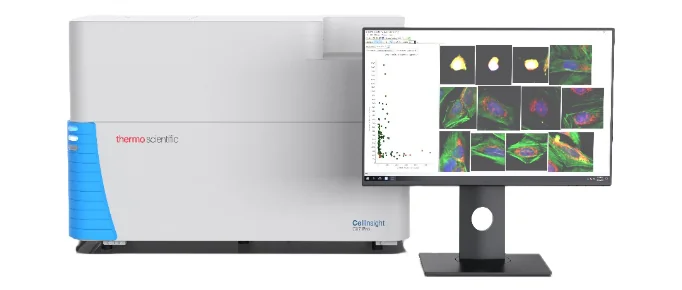
Image: Thermo Fisher Scientific
- LED Engine: Fast, LED-based illumination system
- Cell Painting Ready: Supports multi-parameter cell painting assays with six fluorescent channels
- AI Export: Automated TIFF export for AI analysis pipelines
- HCS Studio Software: Integrated analysis software built-in
- Onstage Incubator: Live-cell imaging with environmental control
- Automated Plate Handling: High-throughput screening capability
The CellInsight CX7 LED Pro is a high-content screening platform that supports widefield, confocal and brightfield imaging modes per Thermo Fisher specifications. Fast LED illumination and integrated HCS Studio software enable rapid screening of compounds and genetic perturbations. Cell Painting support with six fluorescent channels and automated TIFF export for AI pipelines makes this ideal for drug discovery research in UK pharmaceutical laboratories.
View Product →EVOS S1000 Spatial Imaging System
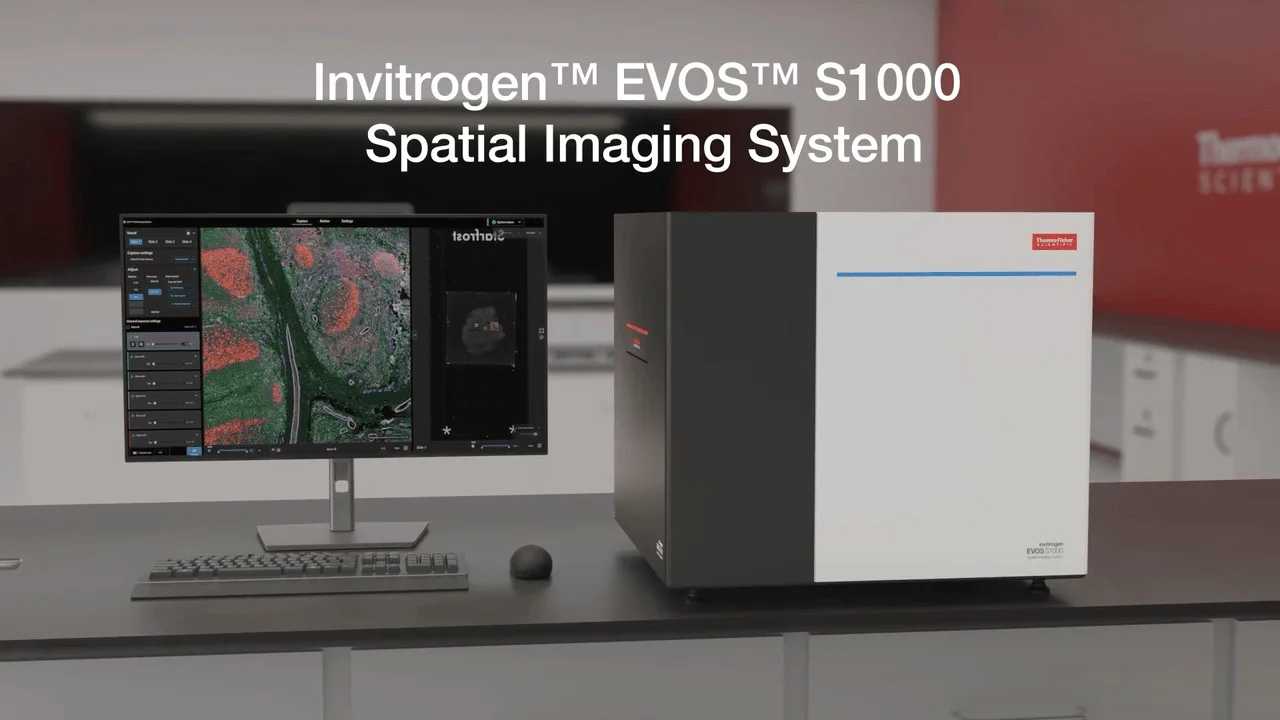
Image: Thermo Fisher Scientific
- Multi-Modal: Multiplex spectral fluorescence, transmitted light, and brightfield imaging
- Tissue Slide Imaging: Optimized for tissue section imaging and spatial analysis
- Automated Scanning: Automated slide scanning with multi-region capture
- High Resolution: Advanced camera for detailed tissue morphology
- Software Analysis: Integrated spatial analysis and annotation tools
- Slide Compatibility: Supports standard glass slides and coverslips
The EVOS S1000 Spatial Imaging System is a high-performance, multi-modal instrument for imaging tissue slides with multiplex spectral fluorescence. It streamlines spatial localization of proteins in tissue sections with automated scanning and integrated analysis tools. Perfect for histology labs, pathology research, and spatial biology applications requiring high-resolution tissue imaging.
View Product →EVOS M7000 — Automated Imaging System
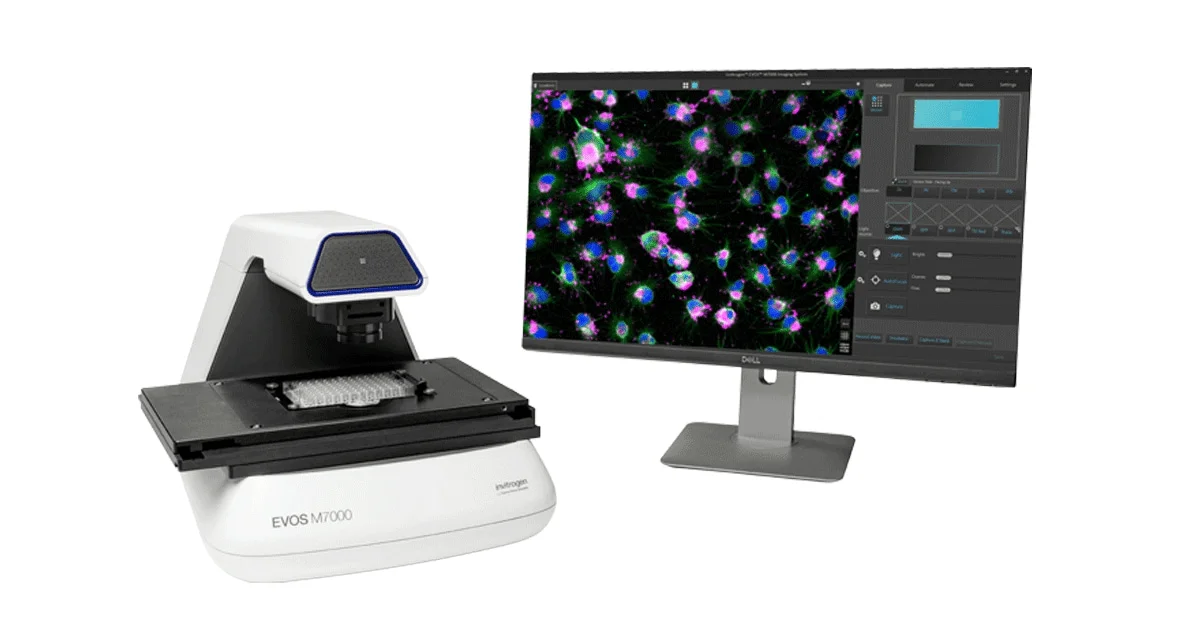
Image: Thermo Fisher Scientific
- Fully Automated: Automated focusing, scanning, and stitching for walk-away imaging
- Multi-Channel Fluorescence: Up to 5 fluorescence channels plus brightfield
- 3D Z-Stacking: Automated Z-stacking with deconvolution for 3D imaging
- High-Resolution Camera: Advanced CMOS camera for publication-quality images
- Environmental Control: Onstage incubator for live-cell time-lapse studies
- AI Analysis Ready: Direct export to analysis pipelines with metadata
The EVOS M7000 is the flagship automated imaging system for demanding research applications. Fully automated operation with multi-channel fluorescence, 3D Z-stacking, and environmental control makes it ideal for complex live-cell studies, high-throughput screening, and advanced quantitative imaging. Perfect for core facilities and research labs needing walk-away automation.
View Product →Olympus IX73
- Phase contrast, DIC, and fluorescence options
- Excellent for live-cell time-lapse imaging
- Modular design allows upgrades as needed
- UIS2 optics system
The IX73 is a reliable, upgradeable inverted microscope built for long-term research use. Its modular design allows laboratories to start with basic phase contrast and add fluorescence or DIC modules as projects evolve. The proven UIS2 optics system delivers excellent image quality for live-cell time-lapse studies, making it a popular choice for developmental biology research.
View Product →Olympus CKX53
- Phase contrast with optional fluorescence module
- Compact design fits in tissue culture hoods
- Binocular and trinocular options available
- Student-friendly design
The CKX53 is a practical inverted microscope designed for teaching environments and routine cell culture work. Its compact footprint fits comfortably inside standard tissue culture hoods, protecting samples from contamination. Optional fluorescence modules allow laboratories to add imaging capabilities without replacing the entire system, making it an economical choice for starter labs and undergraduate teaching facilities.
View Product →Nikon Eclipse Ts2
- Compact inverted design
- Eyepiece and trinocular options
- Optional fluorescence module
- Simple, reliable mechanics
The Nikon Eclipse Ts2 is a compact inverted microscope with proven optics for routine cell culture and basic fluorescence. Its familiar mechanical design and optional fluorescence module make it suitable for teaching laboratories and facilities transitioning from brightfield microscopy. The simple, reliable construction minimises maintenance requirements while delivering consistent image quality for everyday cell monitoring tasks.
View Product →Opera Phenix
- Spinning disk confocal for reduced phototoxicity
- Water immersion objectives
- High-resolution imaging
- Harmony software for analysis
The Opera Phenix delivers spinning disk confocal imaging with water immersion objectives for high-resolution cell-based assays. Reduced phototoxicity compared to traditional confocal systems enables longer live-cell imaging sessions. Integrated Harmony software provides automated image analysis workflows for high-content screening, making this system ideal for drug discovery applications requiring gentle imaging of sensitive cellular samples over extended time periods.
Note: Opera Phenix is now part of Revvity. Link unavailable due to site restrictions.
Search for Opera Phenix →EVOS S1000 Spatial Imaging System
- 9-Plex Tissue Imaging: Up to 8 fluorescence targets plus nuclear stain in a single round
- High-Resolution Spatial Imaging: Detailed localisation of proteins in tissue sections
- Fast Processing: Fully stitched, unmixed, multiplexed images in hours
- Flexible: Compatible with preferred fluorophores, antibodies, and analysis software
- Spatial Biology Ready: Insights into cellular neighborhoods and spatial relationships
- No Bleaching: Single-round imaging without bleaching or cycling protocols
The EVOS S1000 Spatial Imaging System enables spatial biology research by visualising cellular neighbourhoods with up to nine simultaneous fluorescent targets. Single-round multiplexing without bleaching preserves sample integrity while delivering high-resolution images. Compatible with standard fluorophores and antibodies, this system makes advanced tissue analysis accessible for cancer research and drug discovery programmes without requiring complex infrastructure investments.
View EVOS S1000 →Yokogawa CV8000
- Confocal scanning unit
- High-speed imaging
- Multi-well plate compatibility
- CellPath software integration
The Yokogawa CV8000 provides high-speed confocal imaging with a proprietary scanning unit for demanding high-content screening applications. Multi-well plate compatibility and rapid image acquisition enable screening of thousands of compounds daily. Integrated CellPath software streamlines image analysis workflows from acquisition to quantification, making this system well-suited for pharmaceutical screening and toxicology studies requiring consistent, reproducible results at scale.
View Product →🎨 What is Cell Painting?
Cell Painting is a high-content imaging assay that uses six fluorescent dyes to paint different cellular compartments. Developed at the Broad Institute, it creates morphological profiles for classifying cellular states.
How Cell Painting differs from standard fluorescence microscopy
Unlike conventional immunofluorescence, which usually targets one or two proteins with antibodies, Cell Painting stains six independent cellular structures in a single round. Each dye highlights a different compartment — nucleus, endoplasmic reticulum, nucleoli, mitochondria, actin cytoskeleton, and plasma membrane — so the combined image captures the whole-cell morphology rather than a single marker.
The technique is intentionally unbiased: it does not assume which pathway is affected. Instead, a high-content microscope records thousands of cells, and image-analysis software measures 1,500+ morphological features per cell. These features are compiled into a profile that can distinguish drug mechanisms, genetic perturbations, disease states, and toxicity responses.
Cell Painting therefore sits between simple fluorescence imaging and transcriptomics. It is faster and cheaper than RNA sequencing for many screens, while providing spatial information that sequencing cannot. Typical workflows use 96- or 384-well plates, an automated high-content microscope such as the CellInsight CX7, and open-source analysis tools such as CellProfiler.
The six standard Cell Painting dyes are shown below. Each was chosen for its specificity, photostability, and spectral compatibility in a multi-channel imaging workflow.
🔵 Hoechst 33342
A cell-permeable bisbenzimide dye that binds the minor groove of AT-rich DNA regions. It is used at low concentration for live-cell nuclear segmentation because it is minimally toxic and does not require cell fixation or permeabilisation. In Cell Painting, Hoechst 33342 provides the primary nucleus mask from which nuclear size, shape, intensity, and texture features are extracted.
🟢 Concanavalin A
A lectin conjugated to a fluorophore that binds terminal α-D-mannose and α-D-glucose residues on glycoproteins in the endoplasmic reticulum and Golgi apparatus. Because these organelles are highly glycosylated, the signal outlines the ER-Golgi network and reports on protein trafficking, secretion stress, and secretory pathway morphology.
🟡 SYTO 14
A cell-permeant nucleic acid stain with higher affinity for RNA than DNA. In Cell Painting it labels nucleoli and cytoplasmic RNA, making it possible to measure nucleolar area and RNA distribution. Changes in SYTO 14 intensity often reflect altered transcriptional activity or ribosome biogenesis.
🔴 MitoTracker Deep Red
Accumulates in active mitochondria in a membrane-potential-dependent manner and is retained after mild fixation. It reports mitochondrial mass, network morphology, and membrane potential. Loss of signal can indicate mitochondrial dysfunction, a common phenotype in toxicity and metabolic disease screens.
🟣 Phalloidin
A bicyclic peptide from the death-cap mushroom that binds filamentous actin (F-actin) with high specificity. Fluorophore-conjugated phalloidin reveals the actin cytoskeleton, cell shape, adhesion footprint, and polarity. In morphological profiling, actin features distinguish migratory, spread, or rounded phenotypes.
⚪ WGA
Wheat Germ Agglutinin is a lectin that binds N-acetylglucosamine and sialic acid residues on glycoproteins and glycolipids. It labels the plasma membrane and Golgi, highlighting cell-cell boundaries, surface area, and adhesion patterns. WGA intensity can also reflect changes in glycosylation during disease or drug treatment.
📚 Cell Painting Publications & Research
Cell painting was developed by researchers at the Broad Institute. It has become a cornerstone technique for phenotypic screening and drug discovery, generating over 1,500 morphological features per cell. Browse our full searchable research publications database.
🔬 Thermo Fisher Scientific — Cell Painting Blog
Accelerating Drug Discovery with Expanded Cell Painting. Overview of the Image-iT Cell Painting Kit paired with the CellInsight CX7 LED Pro Platform, including a p53 knockout case study in A549 cells.
📖 Cell Painting Application Note (PDF)
Official Thermo Fisher application note detailing the cell painting high-content screening assay, workflow optimisation, and spectral unmixing approaches for multiplex imaging.
🔬 Bray et al. — Nature Protocols (2016)
"Cell Painting, a high-content image-based assay for morphological profiling using multiplexed fluorescent dyes" — The foundational protocol paper from the Broad Institute lab establishing the cell painting assay.
📊 Carpenter-Singh Lab — Full Publication List
Browse all 215+ peer-reviewed papers from the Carpenter-Singh Lab at the Broad Institute, including image-based profiling, CellProfiler software, and drug discovery research.
🔬 Chandrasekaran et al. — Nature Methods (2025)
"Morphological map of under- and overexpression of genes in human cells" — Latest research from the Carpenter-Singh Lab mapping gene expression effects using cell painting across thousands of genetic perturbations.
📖 Caicedo et al. — Molecular Biology of the Cell (2022)
"Cell Painting predicts impact of lung cancer variants" — Demonstrates how cell painting morphological profiles can predict the functional impact of genetic variants in cancer research.
🔬 Yu et al. — Cell Chemical Biology (2023)
"Integrating inflammatory biomarker analysis and AI-enabled image-based profiling to identify drug targets for intestinal fibrosis" — Cell painting aided phenotypic drug discovery for challenging diseases.
🌍 Carpenter-Singh Lab — Press & Media
Collection of press coverage, interviews, and media features about cell painting and the lab's work, including Technology Networks, Stat News, Nature Methods, and CellPress features.
🤖 AI Tools for Cell-Based Assays
Artificial intelligence is transforming cell-based assay analysis. From automated segmentation to morphological profiling, these open-source and commercial tools accelerate drug discovery and systems biology research.
🔬 Cellpose 3.0 — Generalist Segmentation
a generalist algorithm for cellular segmentation that works out-of-the-box on diverse microscopy images. Cellpose 3.0 introduces one-click image restoration (denoising and deblurring) to improve segmentation quality on degraded images. Uses a custom neural network architecture trained on a broad range of cell types and imaging modalities. Open-source Python package with GPU acceleration.
🧠 μSAM — Segment Anything for Microscopy
Built on Meta AI's Segment Anything Model (SAM), μSAM specialises interactive and automatic annotation for microscopy and biomedical imaging. Supports 2D and 3D datasets with fine-tuned models for cellular structures. Enables rapid creation of training data and accurate segmentation with minimal user input. Integrates with napari for interactive visualisation.
📊 CellProfiler — Phenotypic Profiling
Open-source software from the Carpenter-Singh Lab for cell image analysis. CellProfiler measures hundreds of features per cell including size, shape, texture, and intensity. Widely used for high-content screening, cell painting, and morphological profiling. Supports custom pipelines and integrates with machine learning workflows for phenotypic drug discovery.
🤖 Grok 1.5V — Multimodal Image Analysis
xAI's multimodal model with image understanding capabilities. Grok 1.5V processes scientific diagrams, microscopy images, and documents for analysis and interpretation. While primarily a general-purpose model, its visual reasoning capabilities can assist with preliminary image assessment, figure generation, and research documentation. Available via xAI API for developers building image-analysis workflows.
🧬 Cell-APP — Generalisable Cell Annotation
a generalisable method for cell annotation and segmentation model training using active learning. Cell-APP reduces the annotation burden by intelligently selecting the most informative cells for labelling. Supports transfer learning across different cell types and imaging conditions. Published on bioRxiv with open-source implementation for high-throughput screening applications.
🌍 JUMP Cell Painting Consortium
Joint Undertaking for Morphological Profiling — a collaborative effort producing standardised Cell Painting datasets for the scientific community. JUMP-CP provides public data, tools, and resources to enable morphological profiling research. The consortium includes pharmaceutical companies, academic institutions, and technology providers working to establish cell painting as a standard for drug discovery and functional genomics.
🎬 Video Resources & Tutorials
Curated video tutorials and demonstrations covering cell painting techniques, EVOS system workflows, and fluorescence microscopy fundamentals from leading research institutions and manufacturers.
🎥 Introduction to Cell Painting Assay
Overview of the cell painting workflow using the Image-iT Cell Painting Kit. Demonstrates how to label six cellular compartments simultaneously and capture multi-channel fluorescence images for morphological profiling and phenotypic drug discovery.
🎥 Cell Painting for Drug Discovery
Tutorial demonstrating how cell painting generates over 1,500 morphological features per cell. Covers p53 knockout case studies in A549 cells and how morphological profiling reveals drug mechanisms of action through AI-enabled image analysis.
🎥 EVOS Imaging System Workflow
Demonstration of EVOS cell imaging systems for routine cell culture monitoring and fluorescence microscopy. Shows touchscreen interface, automated cell confluency measurement, and multi-channel image acquisition for UK research laboratories.
🎥 Cellpose 3.0 Image Restoration
Tutorial on Cellpose 3.0's one-click image restoration features including denoising and deblurring. Demonstrates how AI-powered preprocessing improves segmentation accuracy on degraded microscopy images before quantitative cell analysis.
🎥 High Content Screening with CellInsight CX7
Overview of the CellInsight CX7 LED Pro platform for high-content screening and cell painting. Demonstrates automated plate handling, LED illumination, six-colour fluorescence acquisition, and integrated HCS Studio software for analysis.
🎥 Segment Anything for Microscopy (μSAM)
Demonstration of μSAM interactive segmentation built on Meta AI's Segment Anything Model. Shows how to segment cells and tissue structures in microscopy images with minimal annotation, supporting both 2D and 3D datasets.
🌈 Fluorescent Microscopy Applications
Fluorescent microscopy uses high-intensity light to excite fluorescent molecules in biological samples. Modern LED-based systems offer longer lifespans and consistent output.
🧫 Cell Counting
AI automated cell counting microscopes use fluorescence and AI-driven segmentation to identify, count and analyse cells. Advanced systems distinguish live vs dead cells, calculate confluence, and track proliferation. Compare Zeiss Axiovert 7, Nikon ECLIPSE Ji, Evident CM30, Leica Mateo FL Advanced, Thermo Countess 3 FL and the Corning Cell Counter in the 2026 UK automated cell counting guide. Common reagents include DAPI, Hoechst 33342, SYBR Green and Propidium Iodide.
📏 Confluence Detection
Measuring the percentage of cell culture vessel covered by cells is essential for determining optimal passaging times and normalizing experiments. Modern systems calculate this automatically. The EVOS M5000 includes built-in confluence analysis.
🔬 EVOS Onstage Incubator 2 (OSI-2)
Environmental control accessory for EVOS M5000/M7000 enabling long-term live-cell imaging. Provides precise temperature, humidity, and gas control for physiologically relevant conditions. Essential for time-lapse studies and hypoxia research. Maintains stable CO2, O2, and N2 levels during extended fluorescence microscopy sessions.
🔬 Live Cell Imaging
Time-lapse fluorescence microscopy tracks cellular processes over hours or days. Onstage incubators maintain temperature, humidity, and CO2 for physiologically relevant conditions. The EVOS M7000 supports automated time-lapse with environmental control. See the EVOS M7000 review.
🧬 GFP and Reporter Assays
Green Fluorescent Protein (GFP) allows visualization of protein localization, gene expression, and cellular processes in real time. Best microscopes for GFP imaging compare LED filter sets, monochrome cameras and UK-tier guidance for EVOS, Nikon and Zeiss systems. Multi-channel fluorescence systems track multiple fluorophores such as mCherry, YFP and CFP simultaneously. See the GFP fluorophore guide.
🧾 Cell Culture Microscope Checklist
Free printable checklist for UK labs comparing inverted, phase-contrast and fluorescence cell culture microscopes side-by-side before requesting a demo or quote. Pair it with the EVOS M3000 for a complete starter review.
💻 Software and AI Analysis
Modern microscopy platforms integrate sophisticated software for image acquisition, analysis, and data management. From vendor-specific packages to open-source alternatives, researchers have multiple options.
🔧 Integrated Platform Software
HCS Studio (Thermo), Harmony (Revvity), MetaXpress (Molecular Devices), and ZEN (Zeiss) offer seamless hardware integration but may require licensing fees.
🔓 Open Source Tools
CellProfiler for Python-based cell counting and analysis. ImageJ/Fiji with thousands of plugins. QuPath for digital pathology. Ilastik for machine-learning segmentation.
🤖 AI and Deep Learning
Automated Segmentation: CNNs identify cell boundaries. Phenotypic Profiling: ML classifies cellular states. Image Restoration: AI denoising improves quality. Super-Resolution: AI upscaling enhances detail. See our AI microscopy guide for UK platforms.
📁 Data Format Considerations
Consider export capabilities: proprietary formats may lock you to vendor software, while open formats (TIFF, OME-TIFF, PNG) enable analysis in any tool. Some platforms offer automated cloud export.