🇬🇧 UK-focused independent guide. Plankton & Zoom compares cell counting microscopes for UK research labs. We do not sell systems or broker quotes. This guide covers manual haemocytometers, automated benchtop counters and microscope-based plate imagers used for routine cell culture, transfection, viability and high-content assays.
Why the Right Cell Counting Microscope Matters
Cell counting sounds simple, but the wrong tool turns a five-minute task into a daily bottleneck. Manual haemocytometers are cheap and familiar, yet they are slow, operator-dependent and hard to audit. Automated cell counters improve speed and reproducibility, while integrated cell counting microscopes add publication-quality images, confluency measurements and multiwell throughput.
The choice depends on what you are really measuring. Total cell number and viability can be handled by a brightfield counter. Transfection efficiency, apoptosis and mixed cultures need fluorescence. Long-term growth curves, drug response and cytotoxicity assays need a live-cell imaging system that sits in an incubator or scans plates automatically. Matching the instrument to the workflow saves money and avoids buying a high-end imager for a job a £2,000 counter could do.
For a broader comparison of UK cell counting systems, see our automated cell counting microscope page and the best automated cell counter UK guide.
Manual vs Automated Cell Counting: Side-by-Side
| Factor | Manual haemocytometer | Automated cell counter | Microscope-based plate imager |
|---|
| Throughput | Low (1-5 samples/day) | Medium (20-100/day) | High (96/384-well plates) |
| Reproducibility | Operator-dependent | High | High |
| Viability dye | Trypan Blue | Trypan Blue or fluorescent | Trypan Blue, fluorescent, label-free |
| Fluorescence counting | No | Optional (FL models) | Yes, multiple channels |
| Image record | No | Yes (most models) | Yes, with metadata |
| Confluency / morphology | No | Limited | Yes |
| UK price band | £30-£200 | £2,000-£8,000 | £15,000-£80,000+ |
| Best for | Teaching, occasional counts | Routine culture, viability | Assays, screens, live-cell growth |
Most UK labs graduate from manual to automated counting as soon as cell culture becomes a regular part of the workflow. The jump to a microscope-based plate imager makes sense when experiments move from flask passaging to multiwell assays, organoid monitoring or high-content screening.
How to Choose a Cell Counting Microscope for Your UK Lab
- Count your daily sample volume. Manual counting is fine for occasional flasks. Once you process more than 20-30 samples per week, an automated counter pays back in time and reproducibility.
- Decide which parameters matter. Total count and viability are basic. Fluorescence counting adds transfection efficiency and marker positivity. Imaging systems add confluency, morphology and assay readouts.
- Choose the optics platform. Brightfield is cheapest. Fluorescence is essential for GFP/RFP work. Inverted microscope-based counters give both counting and imaging in one box.
- Compare throughput and cost per sample. Slide counters suit moderate throughput. Plate imagers scale to hundreds of wells per run and reduce per-sample cost at scale.
- Confirm UK support and software. Check warranty, service contracts, data export to Excel/GraphPad, 21 CFR Part 11 compliance if needed, and distributor training.
UK Microscope Buying Guide 2026
Frequently Asked Questions
What is a cell counting microscope?
A cell counting microscope is an imaging system that counts cells in a sample, either manually by a user or automatically via image analysis. Modern systems combine an inverted digital microscope with software that detects cells, measures viability and exports statistics.
Is automated cell counting more accurate than a haemocytometer?
Yes for routine work. Automated cell counters reduce inter-operator variability and can analyse many more fields of view than a manual count. They struggle with extreme clumps or debris, but overall reproducibility is usually higher.
Can I count GFP or RFP cells with a cell counting microscope?
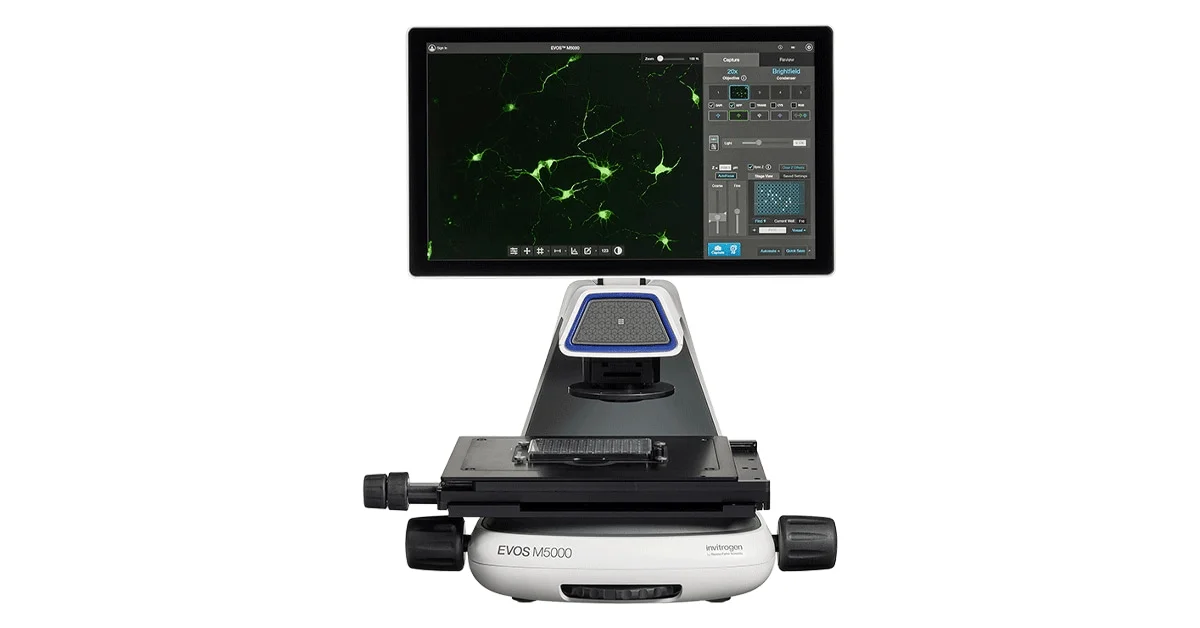
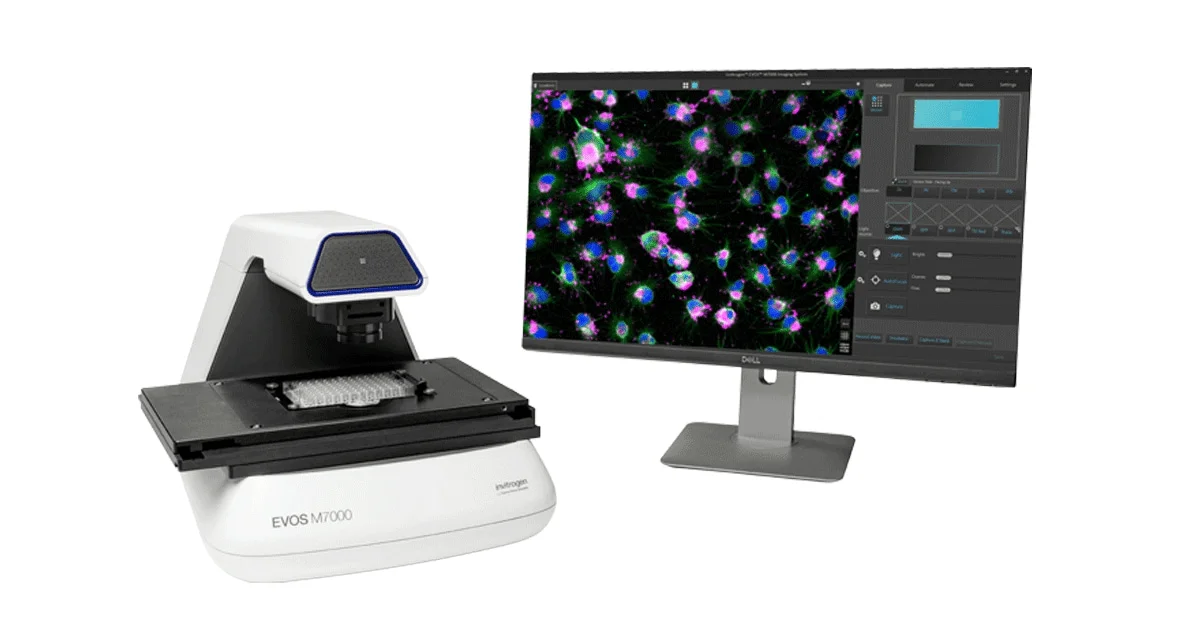
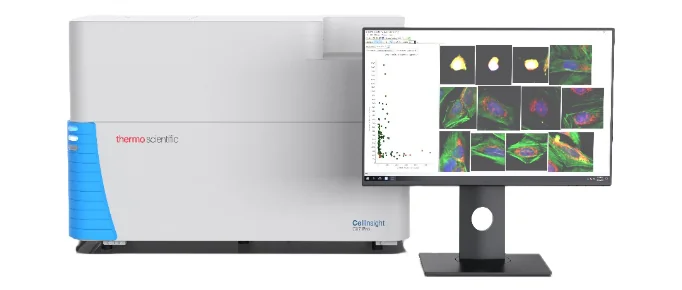
Yes, but only on fluorescence-capable models. The EVOS M5000, EVOS M7000 and CellInsight CX7 all count fluorescent cells. Dedicated counters such as Countess 3 FL and LUNA-III FL also support GFP/RFP quantification.
What is the best cell counting microscope for a UK startup lab?
For low volume and tight budgets, a LUNA-II or Countess 3 is practical. For labs that also need fluorescence imaging, Z-stacks and multiwell assays, the EVOS M5000 or M7000 gives more headroom.
Do I need a high-content system for cell counting?
Only if you are running multiwell assays, screens or morphological profiling. For routine flask and single-sample counting, a benchtop automated counter is enough.